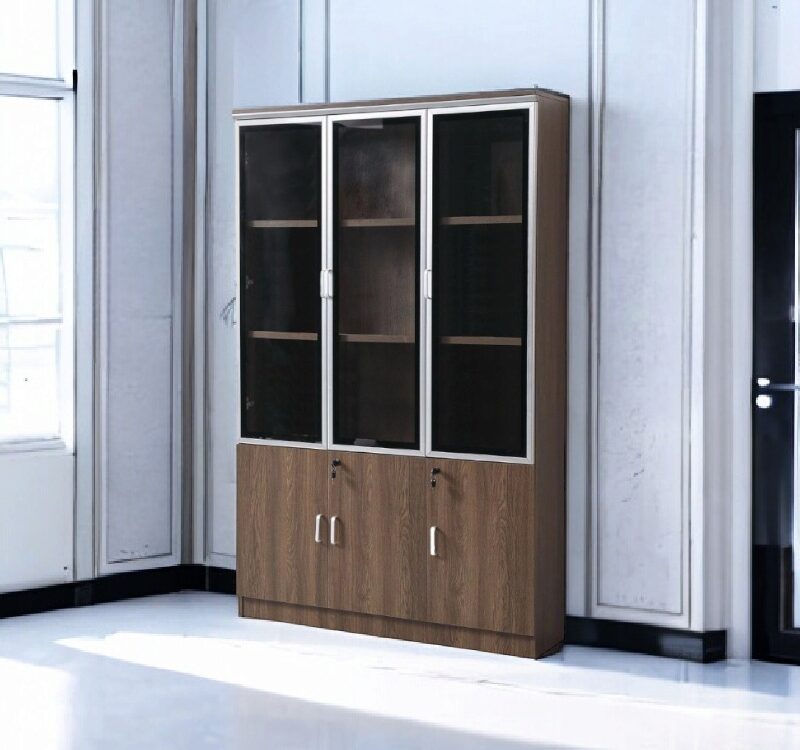
تأسست على رؤية مُختلفة، تهدف إلى تقديم تجربة فريدة من نوعها في الأثاث المكتبي والفندقي لكي نضمن بيئة عمل توفر مساحات عمل مريحة وصحية، حيث نمتاز بخبراتنا الواسعة فأصبحت أحد أفضل المؤسسات الوطنية الرائدة في تجارة وصناعة الأثاث والتصميم الداخلي والسبّاقة على مستوى المملكة في المفروشات المكتبية والفندقية والمنزلية، نهدف الى خلق قيمة لعملائنا عن طريق توفير الجودة العالية في مقابل السعر المناسب.
UX-антипаттерны в действии – Анализ скриншотов популярных онлайн-площадок Просматривая сотни скриншотов популярных онлайн-площадок, мы сразу же видим: навязчивое […]
UX-антипаттерны в действии – Анализ скриншотов популярных онлайн-площадок Просматривая сотни скриншотов популярных онлайн-площадок, мы сразу же видим: навязчивое […]
<?php

// SPDX-FileCopyrightText: 2004-2023 Ryan Parman, Sam Sneddon, Ryan McCue
// SPDX-FileCopyrightText: 2014 PHP Framework Interoperability Group
// SPDX-License-Identifier: MIT

declare(strict_types=1);

namespace SimplePie\HTTP;

/**
 * HTTP Response interface
 *
 * This interface must be interoperable with Psr\Http\Message\ResponseInterface
 * @see https://www.php-fig.org/psr/psr-7/#33-psrhttpmessageresponseinterface
 *
 * @internal
 */
interface Response
{
    /**
     * Return the string representation of the permanent URI of the requested resource
     * (the first location after a prefix of (only) permanent redirects).
     *
     * Depending on which components of the URI are present, the resulting
     * string is either a full URI or relative reference according to RFC 3986,
     * Section 4.1. The method concatenates the various components of the URI,
     * using the appropriate delimiters:
     *
     * - If a scheme is present, it MUST be suffixed by ":".
     * - If an authority is present, it MUST be prefixed by "//".
     * - The path can be concatenated without delimiters. But there are two
     *   cases where the path has to be adjusted to make the URI reference
     *   valid as PHP does not allow to throw an exception in __toString():
     *     - If the path is rootless and an authority is present, the path MUST
     *       be prefixed by "/".
     *     - If the path is starting with more than one "/" and no authority is
     *       present, the starting slashes MUST be reduced to one.
     * - If a query is present, it MUST be prefixed by "?".
     * - If a fragment is present, it MUST be prefixed by "#".
     *
     * @see http://tools.ietf.org/html/rfc3986#section-4.1
     */
    public function get_permanent_uri(): string;

    /**
     * Return the string representation of the final requested URL after following all redirects.
     *
     * Depending on which components of the URI are present, the resulting
     * string is either a full URI or relative reference according to RFC 3986,
     * Section 4.1. The method concatenates the various components of the URI,
     * using the appropriate delimiters:
     *
     * - If a scheme is present, it MUST be suffixed by ":".
     * - If an authority is present, it MUST be prefixed by "//".
     * - The path can be concatenated without delimiters. But there are two
     *   cases where the path has to be adjusted to make the URI reference
     *   valid as PHP does not allow to throw an exception in __toString():
     *     - If the path is rootless and an authority is present, the path MUST
     *       be prefixed by "/".
     *     - If the path is starting with more than one "/" and no authority is
     *       present, the starting slashes MUST be reduced to one.
     * - If a query is present, it MUST be prefixed by "?".
     * - If a fragment is present, it MUST be prefixed by "#".
     *
     * @see http://tools.ietf.org/html/rfc3986#section-4.1
     */
    public function get_final_requested_uri(): string;

    /**
     * Gets the response status code.
     *
     * The status code is a 3-digit integer result code of the server's attempt
     * to understand and satisfy the request.
     *
     * @return int Status code.
     */
    public function get_status_code(): int;

    /**
     * Retrieves all message header values.
     *
     * The keys represent the header name as it will be sent over the wire, and
     * each value is an array of strings associated with the header.
     *
     *     // Represent the headers as a string
     *     foreach ($message->get_headers() as $name => $values) {
     *         echo $name . ': ' . implode(', ', $values);
     *     }
     *
     *     // Emit headers iteratively:
     *     foreach ($message->get_headers() as $name => $values) {
     *         foreach ($values as $value) {
     *             header(sprintf('%s: %s', $name, $value), false);
     *         }
     *     }
     *
     * @return array<non-empty-array<string>> Returns an associative array of the message's headers.
     *     Each key MUST be a header name, and each value MUST be an array of
     *     strings for that header.
     */
    public function get_headers(): array;

    /**
     * Checks if a header exists by the given case-insensitive name.
     *
     * @param string $name Case-insensitive header field name.
     * @return bool Returns true if any header names match the given header
     *     name using a case-insensitive string comparison. Returns false if
     *     no matching header name is found in the message.
     */
    public function has_header(string $name): bool;

    /**
     * Retrieves a message header value by the given case-insensitive name.
     *
     * This method returns an array of all the header values of the given
     * case-insensitive header name.
     *
     * If the header does not appear in the message, this method MUST return an
     * empty array.
     *
     * @param string $name Case-insensitive header field name.
     * @return string[] An array of string values as provided for the given
     *    header. If the header does not appear in the message, this method MUST
     *    return an empty array.
     */
    public function get_header(string $name): array;

    /**
     * Return an instance with the provided value replacing the specified header.
     *
     * This method MUST be implemented in such a way as to retain the
     * immutability of the message, and MUST return an instance that has the
     * new and/or updated header and value.
     *
     * @param string $name Case-insensitive header field name.
     * @param string|non-empty-array<string> $value Header value(s).
     * @return static
     * @throws \InvalidArgumentException for invalid header names or values.
     */
    public function with_header(string $name, $value);

    /**
     * Retrieves a comma-separated string of the values for a single header.
     *
     * This method returns all of the header values of the given
     * case-insensitive header name as a string concatenated together using
     * a comma.
     *
     * NOTE: Not all header values may be appropriately represented using
     * comma concatenation. For such headers, use getHeader() instead
     * and supply your own delimiter when concatenating.
     *
     * If the header does not appear in the message, this method MUST return
     * an empty string.
     *
     * @param string $name Case-insensitive header field name.
     * @return string A string of values as provided for the given header
     *    concatenated together using a comma. If the header does not appear in
     *    the message, this method MUST return an empty string.
     */
    public function get_header_line(string $name): string;

    /**
     * get the body as string
     *
     * @return string
     */
    public function get_body_content(): string;
}