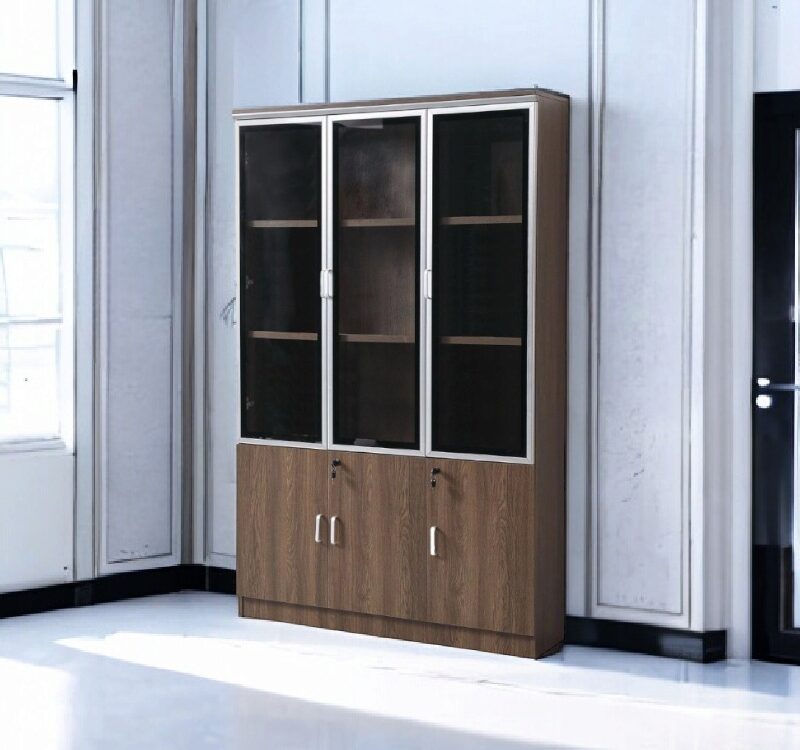
تأسست على رؤية مُختلفة، تهدف إلى تقديم تجربة فريدة من نوعها في الأثاث المكتبي والفندقي لكي نضمن بيئة عمل توفر مساحات عمل مريحة وصحية، حيث نمتاز بخبراتنا الواسعة فأصبحت أحد أفضل المؤسسات الوطنية الرائدة في تجارة وصناعة الأثاث والتصميم الداخلي والسبّاقة على مستوى المملكة في المفروشات المكتبية والفندقية والمنزلية، نهدف الى خلق قيمة لعملائنا عن طريق توفير الجودة العالية في مقابل السعر المناسب.
UX-антипаттерны в действии – Анализ скриншотов популярных онлайн-площадок Просматривая сотни скриншотов популярных онлайн-площадок, мы сразу же видим: навязчивое […]
UX-антипаттерны в действии – Анализ скриншотов популярных онлайн-площадок Просматривая сотни скриншотов популярных онлайн-площадок, мы сразу же видим: навязчивое […]
<?php
/*
 * Copyright 2012 Google Inc.
 *
 * Licensed under the Apache License, Version 2.0 (the "License");
 * you may not use this file except in compliance with the License.
 * You may obtain a copy of the License at
 *
 *     http://www.apache.org/licenses/LICENSE-2.0
 *
 * Unless required by applicable law or agreed to in writing, software
 * distributed under the License is distributed on an "AS IS" BASIS,
 * WITHOUT WARRANTIES OR CONDITIONS OF ANY KIND, either express or implied.
 * See the License for the specific language governing permissions and
 * limitations under the License.
 */

if (!class_exists('UDP_Google_Client')) {
  require_once dirname(__FILE__) . '/../autoload.php';
}

/**
 * Implement the caching directives specified in rfc2616. This
 * implementation is guided by the guidance offered in rfc2616-sec13.
 */
class Google_Http_CacheParser
{
  public static $CACHEABLE_HTTP_METHODS = array('GET', 'HEAD');
  public static $CACHEABLE_STATUS_CODES = array('200', '203', '300', '301');

  /**
   * Check if an HTTP request can be cached by a private local cache.
   *
   * @static
   * @param Google_Http_Request $resp
   * @return bool True if the request is cacheable.
   * False if the request is uncacheable.
   */
  public static function isRequestCacheable(UDP_Google_Http_Request $resp)
  {
    $method = $resp->getRequestMethod();
    if (! in_array($method, self::$CACHEABLE_HTTP_METHODS)) {
      return false;
    }

    // Don't cache authorized requests/responses.
    // [rfc2616-14.8] When a shared cache receives a request containing an
    // Authorization field, it MUST NOT return the corresponding response
    // as a reply to any other request...
    if ($resp->getRequestHeader("authorization")) {
      return false;
    }

    return true;
  }

  /**
   * Check if an HTTP response can be cached by a private local cache.
   *
   * @static
   * @param Google_Http_Request $resp
   * @return bool True if the response is cacheable.
   * False if the response is un-cacheable.
   */
  public static function isResponseCacheable(UDP_Google_Http_Request $resp)
  {
    // First, check if the HTTP request was cacheable before inspecting the
    // HTTP response.
    if (false == self::isRequestCacheable($resp)) {
      return false;
    }

    $code = $resp->getResponseHttpCode();
    if (! in_array($code, self::$CACHEABLE_STATUS_CODES)) {
      return false;
    }

    // The resource is uncacheable if the resource is already expired and
    // the resource doesn't have an ETag for revalidation.
    $etag = $resp->getResponseHeader("etag");
    if (self::isExpired($resp) && $etag == false) {
      return false;
    }

    // [rfc2616-14.9.2]  If [no-store is] sent in a response, a cache MUST NOT
    // store any part of either this response or the request that elicited it.
    $cacheControl = $resp->getParsedCacheControl();
    if (isset($cacheControl['no-store'])) {
      return false;
    }

    // Pragma: no-cache is an http request directive, but is occasionally
    // used as a response header incorrectly.
    $pragma = $resp->getResponseHeader('pragma');
    if ($pragma == 'no-cache' || strpos($pragma, 'no-cache') !== false) {
      return false;
    }

    // [rfc2616-14.44] Vary: * is extremely difficult to cache. "It implies that
    // a cache cannot determine from the request headers of a subsequent request
    // whether this response is the appropriate representation."
    // Given this, we deem responses with the Vary header as uncacheable.
    $vary = $resp->getResponseHeader('vary');
    if ($vary) {
      return false;
    }

    return true;
  }

  /**
   * @static
   * @param Google_Http_Request $resp
   * @return bool True if the HTTP response is considered to be expired.
   * False if it is considered to be fresh.
   */
  public static function isExpired(UDP_Google_Http_Request $resp)
  {
    // HTTP/1.1 clients and caches MUST treat other invalid date formats,
    // especially including the value “0”, as in the past.
    $parsedExpires = false;
    $responseHeaders = $resp->getResponseHeaders();

    if (isset($responseHeaders['expires'])) {
      $rawExpires = $responseHeaders['expires'];
      // Check for a malformed expires header first.
      if (empty($rawExpires) || (is_numeric($rawExpires) && $rawExpires <= 0)) {
        return true;
      }

      // See if we can parse the expires header.
      $parsedExpires = strtotime($rawExpires);
      if (false == $parsedExpires || $parsedExpires <= 0) {
        return true;
      }
    }

    // Calculate the freshness of an http response.
    $freshnessLifetime = false;
    $cacheControl = $resp->getParsedCacheControl();
    if (isset($cacheControl['max-age'])) {
      $freshnessLifetime = $cacheControl['max-age'];
    }

    $rawDate = $resp->getResponseHeader('date');
    $parsedDate = strtotime($rawDate);

    if (empty($rawDate) || false == $parsedDate) {
      // We can't default this to now, as that means future cache reads
      // will always pass with the logic below, so we will require a
      // date be injected if not supplied.
      throw new Google_Exception("All cacheable requests must have creation dates.");
    }

    if (false == $freshnessLifetime && isset($responseHeaders['expires'])) {
      $freshnessLifetime = $parsedExpires - $parsedDate;
    }

    if (false == $freshnessLifetime) {
      return true;
    }

    // Calculate the age of an http response.
    $age = max(0, time() - $parsedDate);
    if (isset($responseHeaders['age'])) {
      $age = max($age, strtotime($responseHeaders['age']));
    }

    return $freshnessLifetime <= $age;
  }

  /**
   * Determine if a cache entry should be revalidated with by the origin.
   *
   * @param Google_Http_Request $response
   * @return bool True if the entry is expired, else return false.
   */
  public static function mustRevalidate(UDP_Google_Http_Request $response)
  {
    // [13.3] When a cache has a stale entry that it would like to use as a
    // response to a client's request, it first has to check with the origin
    // server to see if its cached entry is still usable.
    return self::isExpired($response);
  }
}